Creating Digital Products to Sell: 9 Ideas You Can Start Today
Making money online doesn’t require a warehouse, inventory, or shipping label.
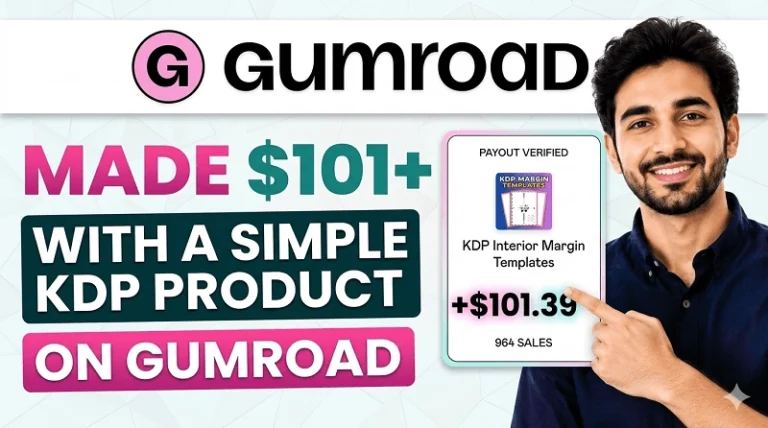
Digital products let you create something once and sell it forever — to anyone, anywhere in the world. I’ve been selling digital products on Gumroad since early 2020. Over 5,800 sales. More than 34,000 product views. And this is only one part of the picture.
Here’s everything you need to know — from product ideas to platforms to marketing.
Why Selling Digital Products Is the Smartest Online Business Right Now
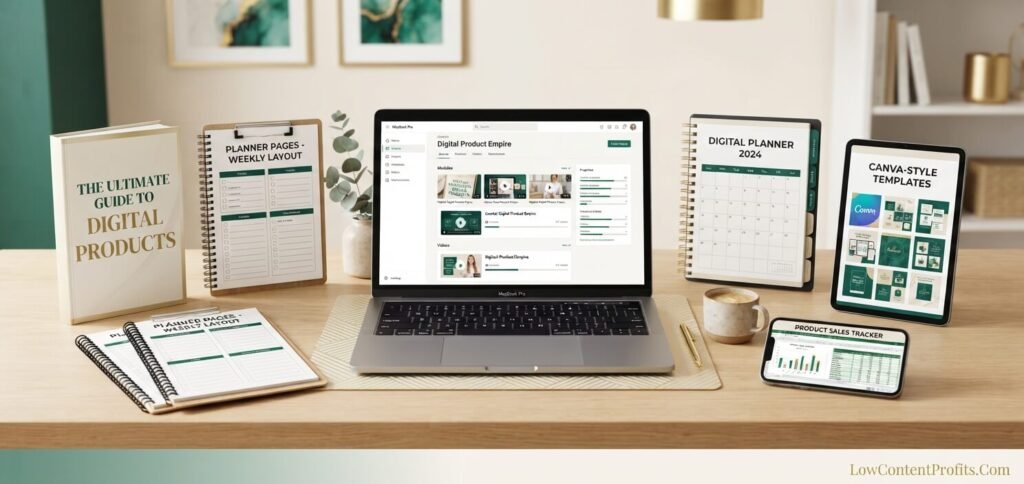
🎁 Download 15 FREE KDP Interior Templates
Save time and create beautiful low-content books faster with these 15 ready-to-use KDP interiors — completely free! Perfect for journals, planners, and activity books.
Can you really make money selling digital products? Yes — and the numbers back it up.
The global digital goods market is growing at a rapid pace. The e-learning industry alone is projected to surpass $400 billion by 2026. Creators on platforms like Gumroad, Etsy, and Teachable are pulling real income — not just side hustle money.
Why are digital products so powerful?
There is no inventory. No shipping. No lost packages. No restocking. You build the product once and it sells while you sleep.
Low cost to start is another huge reason. Tools like Canva, Google Docs, and Google Sheets are free. You don’t need a studio, equipment, or a big budget.
Scalability is infinite. One product can sell 1 time or 10,000 times. The effort stays the same either way.
For USA-based creators, this is especially powerful. English-language digital content commands the highest demand globally. Platforms like Etsy, TPT (Teachers Pay Teachers), and Gumroad are built for this market.
What most competitors don’t tell you: A freebie strategy is just as important as a paid strategy. Giving away free products builds trust, grows your audience, and leads to paid sales later. That’s exactly how I built my Gumroad store — a mix of free and paid products that kept people coming back.
Already thinking about selling your first digital product? If Gumroad is the platform you’re considering, I’ve put together a practical 1-Hour Gumroad Guide to help you set up your store and get started without unnecessary tech overwhelm.
Digital Product Ideas You Can Start Creating Today
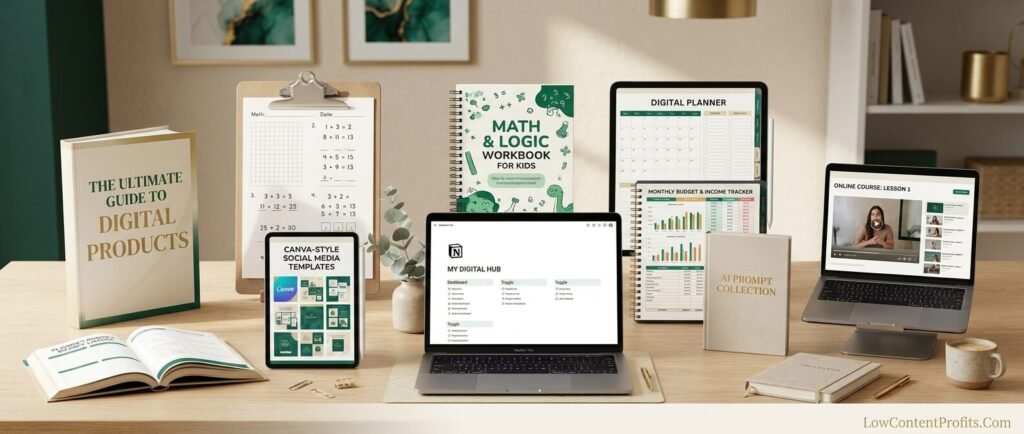
What digital products sell the best? Here are 9 proven ideas — from beginner-friendly to slightly advanced.
eBooks and PDF Guides
eBooks are the most accessible digital product to create. All you need is Google Docs and an idea worth sharing.
They work in almost every niche — personal finance, productivity, health, self-publishing, parenting, fitness, and more.
The best part? A well-written PDF guide sells just as well as a designed course — sometimes better.
Tool to use: Google Docs → export as PDF. Done.
Where to sell: Gumroad, Payhip, Amazon KDP
Canva Templates
Canva templates are one of the top-selling digital products on Etsy right now.
Social media kits, resume templates, business card designs, pitch decks, media kits — buyers pay for professional-looking designs they can customize in minutes.
The free version of Canva is enough to build and sell these products.
Where to sell: Etsy, Creative Market, Gumroad
Printables
Printable digital products are evergreen sellers. Think planners, habit trackers, meal planners, to-do lists, and budget sheets.
Etsy alone has millions of buyers searching for printables every month. This niche is low competition in specific sub-niches and high in buyer intent.
Price range: $2–$15 — but volume makes the difference.
Tool to use: Canva
Spreadsheets and Trackers
Google Sheets-based products are underrated.
Budget trackers, expense dashboards, freelance invoice trackers, fitness logs — people pay real money for a well-structured spreadsheet that saves them hours of setup.
My spreadsheet products on Gumroad consistently perform. Buyers perceive spreadsheets as high-value tools — not just documents.
Tool to use: Google Sheets (completely free)
Online Courses and Workbooks
The online learning market is massive — and it’s not slowing down.
You don’t need a full video course to get started. A course workbook — a structured PDF guide with exercises — can sell for $20–$97 or more.
If you do want video, Loom is free and easy. Pair it with a Canva-designed workbook and you have a complete product.
Where to sell: Gumroad, Payhip, Sellfy, Teachable
Digital Journals and Planners
Digital planners for GoodNotes, Notability, and Notion are booming right now.
Gratitude journals, daily planners, goal-setting notebooks — this niche sells heavily on Pinterest and Etsy.
It’s especially popular in the USA wellness and productivity niche.
Tool to use: Canva or Adobe Express
Notion and Google Docs Templates
Notion templates are a quietly growing digital product niche.
Freelancers, students, and small business owners are buying pre-built Notion dashboards, project trackers, and content calendars.
This niche has lower competition than printables but fast-growing demand. If you use Notion yourself — you can build and sell what you already use.
Where to sell: Gumroad, Etsy
Stock Photos and Digital Art
If you’re a photographer or illustrator, your work is already a digital product.
Stock photos, digital illustrations, clip art bundles, and SVG files sell consistently on Etsy, Creative Market, and Adobe Stock.
One well-tagged photo pack can generate passive income for years.
Educational Worksheets on TPT
Teachers Pay Teachers (TPT) is one of the largest digital product marketplaces in the USA — built specifically for educators.
If you can teach a concept — math, literacy, science, ESL — you can sell it here.
I recently started listing products on TPT. The audience is highly targeted, the buyer intent is strong, and the niche is built for text-based, educational digital content.
👉 Want to create and sell digital products fast? I put together a 50-page PDF guide sharing everything I have learned since 2020. It’s super practical, and people are loving it. I call it The 1-Hour Gumroad Guide; you can learn more about it here.
How to Create Your First Digital Product Step by Step

How do you actually create a digital product from scratch? Here’s the exact process.
Pick One Idea and Validate It First
Don’t create blindly.
Search Etsy for your product idea. Look at bestsellers. Check the number of reviews. Browse Reddit communities in your niche. Look at what’s already selling — then create something better or more specific.
Validation saves weeks of wasted effort.
Need digital product ideas? Do check out these 25 Profitable Digital Products to Sell in 2026 (Even If You Are a Beginner)
Create the Product with Free Tools
You need zero paid software to start.
- Google Docs → eBooks, PDF guides, workbooks
- Canva → Templates, journals, printables, covers
- Google Sheets → Trackers, dashboards, planners
- Calibre → Convert eBooks into multiple formats (ePub, MOBI, PDF)
- Adobe Express → Mockups and product visuals
All of these are free. There is no reason to wait.
Design a Professional Cover
First impressions drive sales.
Your product cover is the first thing buyers see. A clean, readable, professional-looking cover increases click-through rate and conversions.
Use Canva mockup templates or Adobe Express to create a cover in under 30 minutes.
What makes a good cover:
- Clear, readable title
- Clean font (not more than 2 fonts)
- Relevant image or simple graphic
- Consistent brand color
Write a Keyword-Rich Product Description
Your product description is your silent salesperson.
Write it around what the buyer will achieve — not just what the product is.
Bad: “This is a budget tracker spreadsheet.”
Good: “Take control of your finances in 10 minutes. This done-for-you budget tracker helps you track income, expenses, and savings — all in one simple Google Sheet.”
Include your main keywords naturally. This matters for Etsy SEO, Gumroad discovery, and Google search rankings.
Price It Right for the USA Market

What price should you charge for a digital product?
For beginners: start between $5 and $27.
This is the USA buyer’s impulse-buy zone — low enough to buy without thinking, high enough to signal value.
If you’re using Gumroad’s Pay-What-You-Want model, set a minimum price. This filters out non-buyers while keeping it accessible.
Freebies are powerful for audience building — but price your flagship products fairly.
Best Platforms to Sell Your Digital Products Online

Where should you sell digital products? Here’s an honest breakdown — including what most guides skip.
Gumroad — Best for Beginners
Gumroad is the easiest platform to start on today.
It’s free to use. It handles payments, delivery, and file management automatically. You just upload your product and share the link.
I’ve used Gumroad since 2020. It processed over 5,800 of my sales without a single technical problem.
What competitors don’t tell you: Gumroad has almost no built-in discovery. You must bring your own traffic. But for anyone with a blog, YouTube channel, or social media — this is not a problem.
Etsy — Best for Printables and Templates
Etsy has over 90 million active buyers — and millions of them specifically search for digital downloads.
The platform has built-in search traffic. This means buyers can find you without you promoting the listing — if you use the right keywords.
Best for: Canva templates, printables, digital planners, trackers, clip art, and digital art.
Key tip: Etsy SEO is everything. Use all 13 tags. Write keyword-rich titles. Use the exact phrases buyers are searching.
TPT — Best for Educational Digital Products
Teachers Pay Teachers is a niche goldmine for educational content creators.
If your product teaches something — a concept, a skill, a subject — it belongs on TPT.
The USA educator market is massive and loyal. Buyers return again and again when they find a seller they trust.
I recently launched products on TPT. The platform’s built-in audience is one of the most targeted in the digital product space.
Shopify and Sellfy — Best for Scaling
Shopify and Sellfy give you a fully branded digital storefront.
You own the customer relationship. You control the email list. You set the experience.
But: These platforms require more setup effort. Start on Gumroad or Etsy first. Move to Shopify when you’re ready to scale.
Payhip and LemonSqueezy — Free Alternatives
Payhip and LemonSqueezy are solid Gumroad alternatives.
Both are free to start. Both handle payment and digital delivery. Both work well for eBooks, PDFs, and courses.
If you want to diversify away from Gumroad, start with Payhip.
How to Market Digital Products and Drive Real Sales
How do you actually get people to buy your digital product?
This is what most blogs skip entirely.
Use Content as Your Traffic Engine
The most sustainable way to drive digital product sales is free content.
Write a blog post about your topic → link to your product. Upload a YouTube video teaching the concept → put the product link in the description. Publish a Medium article → drive readers to your Gumroad store.
This is the exact system behind my 34,000+ Gumroad views. My KDP blog, YouTube channel, and content across platforms funnel warm readers directly to my products.
Warm traffic converts far better than cold traffic. Always.
Pinterest — The Most Underrated Platform for Digital Products
Pinterest is not social media. It’s a visual search engine.
Pins stay discoverable for months — sometimes years. A single well-designed pin linking to your Etsy listing or Gumroad product can drive consistent traffic.
Create pins with clear text overlays. Use vertical 2:3 ratio. Link directly to your product page.
Best niches on Pinterest: planners, trackers, printables, recipes, finance tools, home organization, self-improvement.
The Freebie-to-Paid Funnel
How do freebies help sell paid products?
Give away a small, valuable product for free. Build trust. Then offer a paid upgrade.
This is a core part of my strategy. Many of my Gumroad “sales” are free downloads — given to YouTube viewers and blog readers. The result? A warm, loyal audience that buys paid products later.
Freebie → Trust → Paid Product → Repeat buyer.
Email List — Your Most Valuable Asset
Platforms can shut down. Algorithms can change. Your email list is yours forever.
Gumroad lets you email your past buyers directly. Use this. Even a simple monthly update or new product announcement drives sales.
If you’re not building an email list, start today. Use Gumroad’s built-in email, Mailchimp, or ConvertKit — all have free plans.
What Sells Fast — Trending and Problem-Solving Products
What digital products sell quickly? Products that solve an immediate, specific problem.
- New Year planners in December/January
- Budget trackers in January and April (tax season)
- Resume templates during hiring seasons
- AI tools guides — trending right now across all platforms
- Study guides and worksheets — constant demand on TPT and Etsy
Seasonal products + evergreen products = consistent income year-round.
Final Thoughts
Creating and selling digital products is one of the most practical ways to build online income in 2025.
You don’t need expensive tools. You don’t need a massive following. You need one solid product, one platform, and one traffic strategy — then you build from there.
Pick one idea from this list. Create it this week. List it on Gumroad or Etsy today.
The best time to start was five years ago. The second-best time is right now.
Already thinking about selling your first digital product? If Gumroad is the platform you’re considering, I’ve put together a practical 1-Hour Gumroad Guide to help you set up your store and get started without unnecessary tech overwhelm.
Have questions about starting your digital product business? Drop them in the comments below.
FAQ: Your Top Questions About Selling Digital Products Answered
What is the most profitable digital product to sell?
Online courses, Canva templates, and eBooks consistently rank as the most profitable digital product types. Courses can sell for $50–$500+. Templates sell at high volume even at $5–$15. eBooks sit in the middle. The most profitable product depends on your niche and your audience — but any of these three can generate serious income with the right marketing.
Can ChatGPT create a digital product?
Yes — and this is a major advantage for creators right now. ChatGPT can help you outline an eBook, write chapters, draft product descriptions, and structure a workbook. But the key is adding your own experience, perspective, and formatting. AI gives you the draft. You give it the value. Tools like Canva then turn the content into a polished, sellable product.
What can I sell to make $1,000?
Here’s real math: Sell a $10 eBook 100 times = $1,000. Sell a $25 Canva template pack 40 times = $1,000. Sell a $97 mini-course just 11 times = $1,000+. The product matters less than the marketing. Focus on solving one specific problem, list it on Etsy or Gumroad, and drive traffic through content or Pinterest.
How to make $500 a day?
$500/day from digital products requires volume, pricing, and multiple platforms working together. That’s $15,000/month — achievable but not overnight. Creators at this level typically have multiple products listed on Etsy, Gumroad, and their own site. They have a large email list, consistent content output, and products priced at $20–$100+. It is real — but it is built over time, not overnight.
What sells really quickly online?
Products with immediate utility sell fastest. Budget trackers, resume templates, meal planners, study worksheets, and social media templates are consistently fast movers. Products tied to a trending topic (AI, remote work, side hustles) also move quickly. Keep your titles keyword-specific and your product description focused on the exact transformation the buyer gets.
How to earn 1 lakh per month in digital marketing?
For a USA-focused digital product business, the equivalent goal is roughly $1,200/month — a solid full-time side income. Achieving this means having 5–10 quality products across Gumroad, Etsy, and TPT, with consistent traffic from a blog, YouTube, or Pinterest. Build the foundation first — one great product, one platform, one traffic source. Then scale from there.
My Recommended KDP Masterclass 2026 💡
KDP Masterclass By Self Publishing Titans
I absolutely love this Masterclass because it’s one of the most up-to-date and practical KDP courses available. The creators aren’t just teachers — they’re real KDP publishers who’ve earned over $300K in book royalties! 📚 I personally took this class and noticed a steady increase in my KDP sales over time. If you’re serious about growing your publishing business in 2026, this course is a total game changer.